

|
The powerhouse work of two second-generation New Orleans artists carry on the French Quarter's artistic legacy. - by Saskia Ozols New Orleans, particularly the French Quarter, has long nurtured the artistic voice. Our understanding and appreciation of the music, literature, Beaux Arts, and what it means to be a practicing artist in the city of New Orleans draw certain excitement. If nothing else, we are a city connected deeply to art, inspiration, and creativity. We are a city of artists: of performers, painters, poets, and the people that love them. The arts play a vital role in our cultural identity, in what helps New Orleans exist as unique and what will continue to keep us afloat in the broader world of fast development, underinformed administrators, and complete cuts in arts education and funding. Digital interaction, fast homogenization, and grossly caricatured cultural identifiers are often placed above basic preservation of a sustainable environment for artists. With an eye on the arts, and painting in particular, two contemporary voices emerge with similarities that bind present and past while offering the potential for more thorough consideration of our visual art scene. Emilie Rhys and Gretchen Howard stand out with the work they are currently making as well as their deep connection to art in the French Quarter. Taken individually, Rhys and Howard are both powerhouse painters; each body of work dances and sings in its vibrance and connection with the culture of our city; yet considered together they offer the potential to transform our understanding of the visual arts and its relationship with New Orleans. Howard and Rhys’ work address New Orleans culture and the creative climate of our city in very different, yet equally powerful ways. Both artists have classical training and understand unequivocally what it takes to communicate visually; both incorporate the structures of expression in their paintings despite different paths for painting, were children of artists who worked in New Orleans, and both rebelled in certain ways against artist fathers who also kept studios in the French quarter. Both artists also maintain their own vibrant painting practices and exhibit their work in the French Quarter today. As we consider their contributions to the New Orleans art community through dedication and perseverance in painting, we encounter a place where color, form, and communication exist not only as a silent song but as a bursting, growing, and developing entity connected to our cultural identity. Gretchen Howard’s recent paintings offer instant connection with icons, images, and visual metaphors that reflect an intuitive navigation of New Orleans’ unique environment. Her works present abstract spaces, colors, and forms that invite interpretation from any direction. Although she received training in the classical tradition; including from her late father, the highly sought-after New Orleans painter, portraitist, and printmaker, Dell Weller, Howard employs a different genre all her own to express a unique narrative. She has moved beyond her background to forge an individual métier that beckons history, spirituality, and connection through visual means. Her series of paintings currently on view at Gallery Orange (819 Royal Street) are filled with mystery; abstract elements such as water and air envelop natural forms related to their respective identities. Suggestions of flowers, fish, wings, and birds hover in weightlessness through atmospheres of layered light. Opportunity for connection is offered with ladders suspended in ethereal illumination. They allow contrasting moments of gesture as the suggestion of climbing, descending, or traveling between the two worlds is introduced. In Louisiana, an Angelic form with wings and arms outstretched toward raindrops or tears floats in the sky above Louisiana fauna, floods, and fruit. There is an air of both hurt and healing as contrasting elements juxtapose one another in this luminescent piece. The contrasts in these paintings allow meditation on both the destructive and reconstructive elements we know so well in our city. The broader symbolic function of Howard’s imagery allows intersection between visual metaphors as they exist in the New Orleans experience with more ancient artistic and spiritual ideographs. The connection between her work and her artistic lineage transcends place, time, and technique while offering an example of the generational artistry of New Orleans. Similar to Howard in artistic lineage and generational artistry, Emilie Rhys painted with her own late father, Noel Rockmore, also an artist who worked in the French Quarter perhaps most well-known for creating the murals of music and musicians at Preservation Hall. Rhys’ paintings hang in her gallery, Scene by Rhys, at 1036 Royal Street just a block or so away from Gallery Orange where Howard exhibits. It is a walk well worth making. Rhys’ exhibition space is filled with her drawings, paintings, and studies; her space bubbles with visual conversation, and showcases her recently published book: The Art of Noel Rockmore and Emilie Rhys. Rhys’s paintings and drawings beckon entry to New Orleans culture. They record the making of music through painting and drawing, and contain the energy, line, and movement of life itself. She renders authentic experience that goes beyond simple documentary or illustration. Her work celebrates the interaction between artist and viewer as it happens only in New Orleans. Rhys’ paintings document the city’s music scene through drawing actively performing musicians on location directly in front of their performances. She works in the always contemporary, yet classical dialect of observation-based painting and sketching. This realist technique records the vision of the artist as it intersects with inspiration, elements of the unknown, and the changing circumstances of the environment. When working in this way, directly in front of one’s subject, the result will always be unique, always reflective of the time in which the artist lived, the exact moment that they were painting, and include any surrounding or interior influences. Her life-sized oil portraits, also from direct observation, are practically sculpted with paint. She explains that each sitter requires a different amount of time, and she works her way through multiple compositions and poses, all on the same painting structure en route to the final version. Her understanding of form, volume, value, and color give uncanny depth. Some works include notes of both natural and neon light. In -------portrait, she adds a glow of neon to suggest the outdoor signs encountered on the way inside for music. By contrast her quick gesture sketches which she creates nightly in local clubs dance off the page. Gesture drawing, light, life energy of the subject all co-exist with dynamic importance. They can all be seen at her gallery, a beautiful stop on Royal Street that allows interaction with New Orleans, its art, and its music through the simple act of looking at pictures. Both Gretchen Howard and Emilie Rhys paintings demonstrate clear connection to the experience of being, living, or interacting with the mystery of New Orleans. Their work offers alternative entry to the complex relationship we have with our environment through art.
If art is a reflection of society, we look to it for an understanding of how culture has evolved and how it is affected by current events, trends, and social structures. The struggles and triumphs of any given generation live for the benefit of future generations if we create the circumstances which allow it. Maintaining uniqueness, embracing our artistic voices and creating a model that fosters support, education, and practice in the arts will preserve our unique character and build on our existing library of artistic activity. An environment that includes visual art as a vital component of our identity contains the potential to broaden understanding of our own history – as well as the potential for a future that continues to incorporate and celebrate the arts.
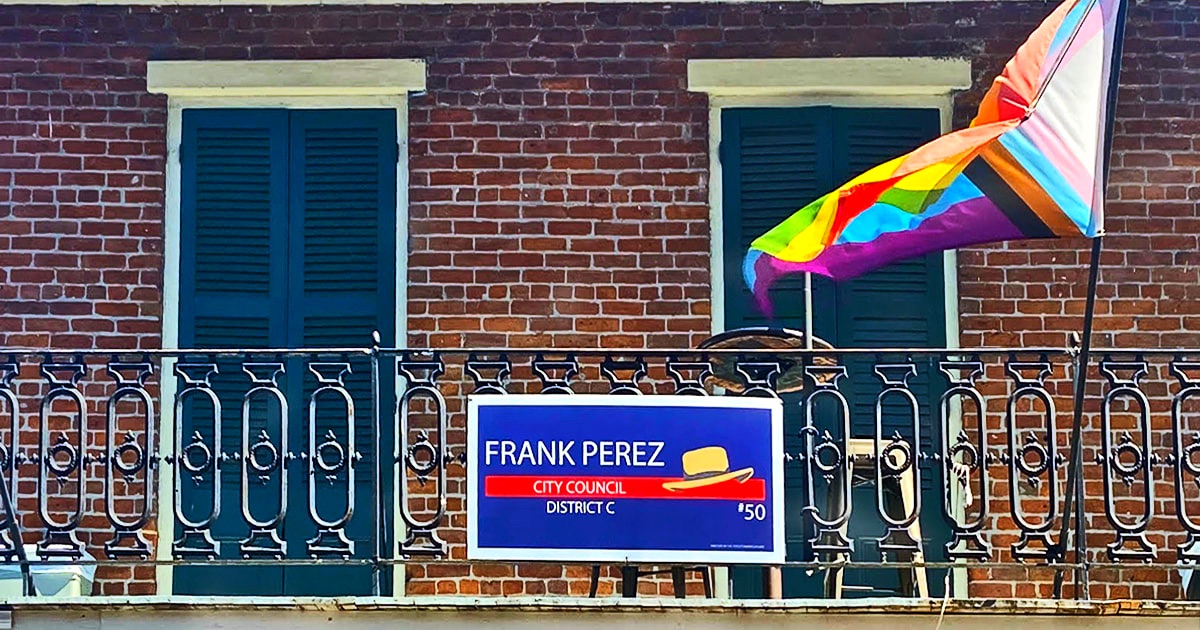
Are you nuts?
The overwhelming majority of NOLA's District C voters live on the West Bank and no East Bank candidate has won the council seat in more than four decades. Despite the odds, a French Quarter resident, writer and activist throws his signature hat in the ring. - by Frank Perez
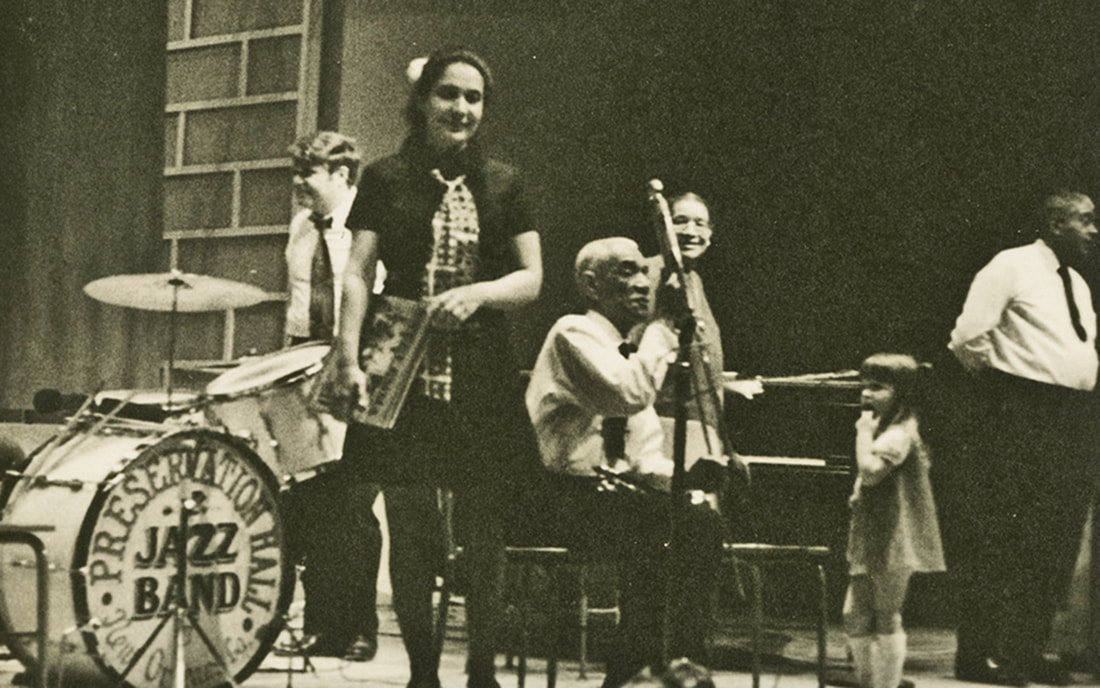
Allan Jaffe, Sandy Jaffe, DeDe Pierce, Billie Pierce, Willie Humphrey, courtesy The Historic New Orleans Collection, The William Russell Jazz Collection, acquisition made possible by the Clarisse Claiborne Grima Fund, acc. no. MSS 520.2624
When a honeymoon lark turned into a musical endeavor, the young bride couldn't have imagined the reverberations that would beat on after her passing. - by Nan Parati |
Archives
January 2023
Categories
All
|



 RSS Feed